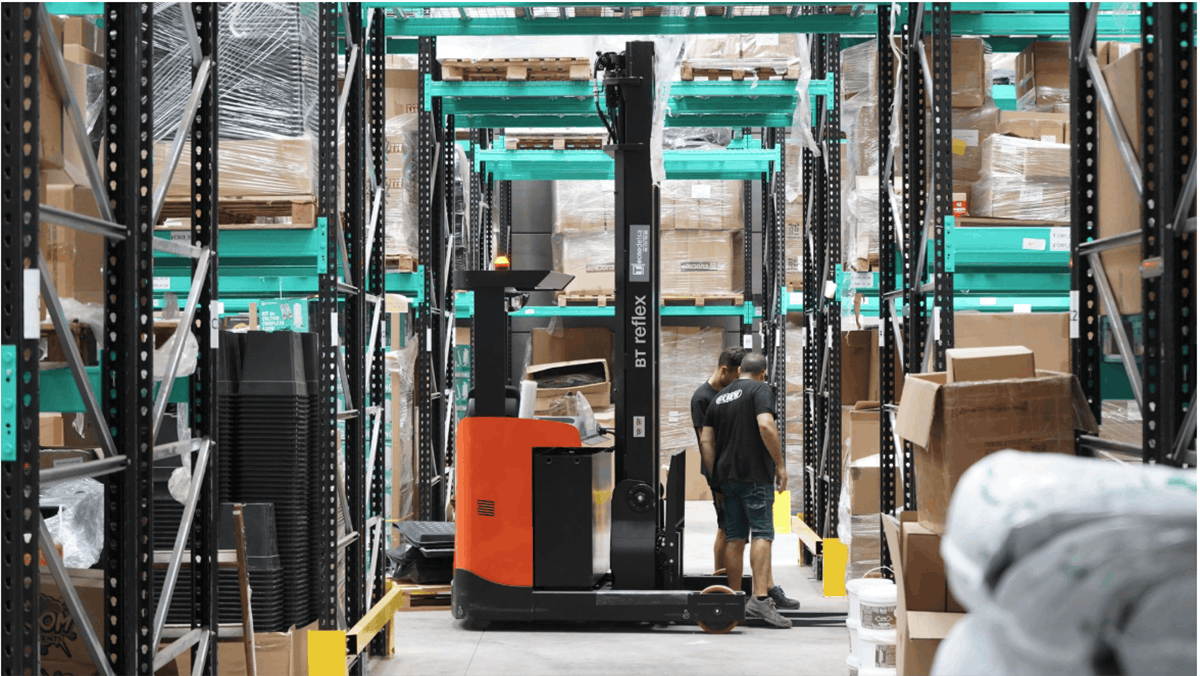
A warehouse rarely announces that its storage system has reached its limit. The change happens slowly. A few pallets end up on the floor, pickers take longer routes, and forklift operators start squeezing through aisles that once felt wide. Each workaround seems minor on its own, yet together they cost time, money and sometimes safety. For growing distributors, manufacturers and retailers, recognizing these signals early makes the difference between a planned upgrade and an expensive emergency. Here are six signs that your racking no longer matches the way your business works.
Pallets are piling up on the floor
Floor stacking is usually the first visible symptom. When incoming stock has nowhere else to go, it lands in staging areas, along walls or at the end of aisles. This wastes vertical space you already pay for and makes inventory harder to count. If your team regularly stores loads outside the racks, your current pallet racking simply lacks the positions your volume now requires, and adding levels or bays can recover that lost capacity.
Picking takes longer than it used to
Rising pick times often point to a layout problem rather than a staffing one. Fast-moving products end up stored high or deep because the best locations are already full. Workers travel farther, wait for forklifts and handle the same pallets twice. Track the average time per order over a few months. A steady increase, without a matching change in order complexity, suggests that the storage system no longer supports your workflow.
Your product mix has changed
Racking designed five years ago reflects the inventory you carried five years ago. New product lines, smaller case sizes or longer items such as pipes and lumber may not fit standard beam spacing. Teams compensate by leaving gaps, mixing loads or stacking cartons unevenly. Selective racks, drive-in systems, carton flow and cantilever racks each suit different products, and a mixed approach often works best.
Review your SKU profile before buying
Before ordering new equipment, list your SKUs by size, weight and turnover. This simple exercise shows which items need quick access and which can sit in dense storage. It also prevents the common mistake of copying the old layout with more steel. A supplier with design experience can use this data to recommend the right mix of systems and beam heights.
Damage to uprights and beams keeps happening
Bent uprights, dislodged beams and scraped frames show that equipment and racking are fighting for space. Narrow aisles, overloaded positions and rushed operators all increase the risk. Damaged components lose load capacity and can fail without warning, which puts workers at risk. Regular inspections, column protectors and clear load signs help, but repeated damage usually means the layout itself needs rethinking.
You are renting overflow space
Paying for a second building or temporary trailers to hold excess stock adds rent, transport and handling costs every month. In many cases, the main warehouse still has unused height above the existing racks. Taller frames, a mezzanine or a high-density system can bring that inventory back under one roof. Compare the yearly cost of overflow storage with the price of a reconfiguration, and the numbers often speak for themselves.
Inventory accuracy is slipping
When products are stored wherever there is room, they become harder to find. Cycle counts take longer, mispicks increase and customers receive the wrong items. A well-organized racking system with clear labelling and logical zones gives every pallet a home. If your team spends more time searching than picking, the problem often starts with how and where the product is stored.
contributed post