
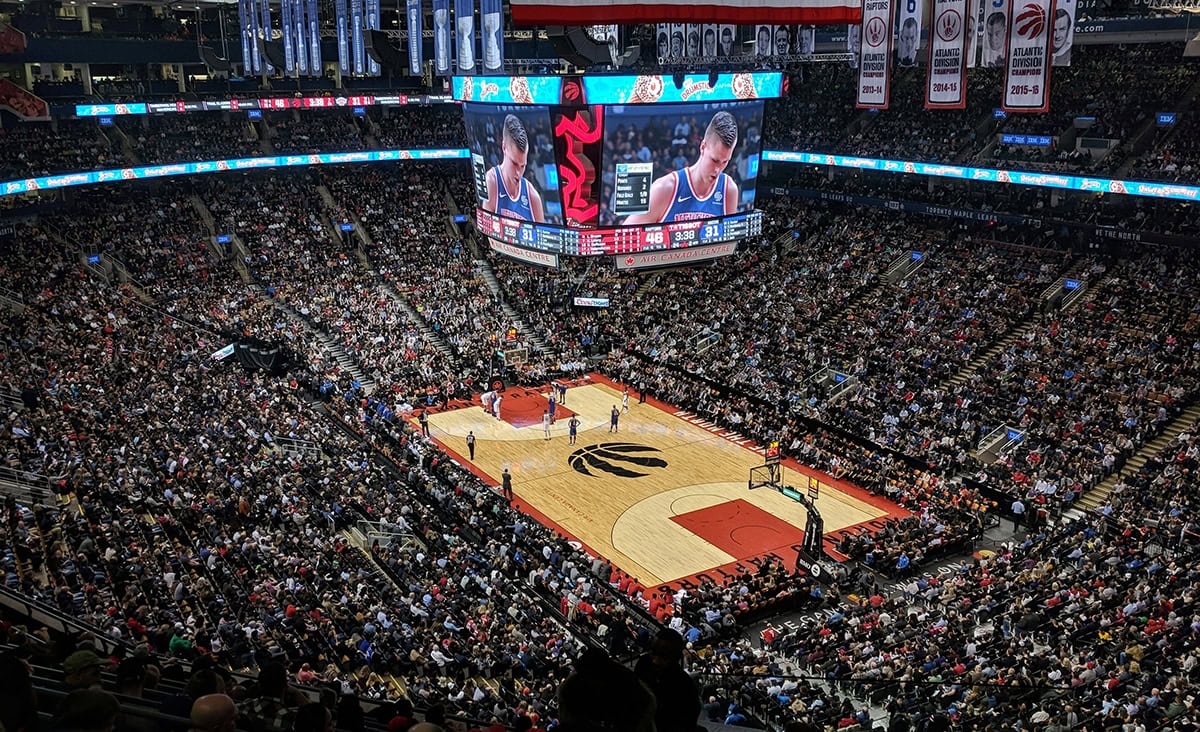
The Toronto Raptors’ opening weeks have brought five storylines into focus, from Kawhi Leonard’s recovery to Scottie Barnes’ offensive development. After last season’s improvement under Darko Rajaković, attention now turns to how the current roster works together.
Leonard’s availability, opportunities for younger players and Toronto’s frontcourt combinations give fans plenty to follow. Perimeter shooting adds another question, particularly when opponents slow the game and make the Raptors create chances against a set defense.
1. Kawhi Leonard’s Return Comes With Familiar Questions
Kawhi Leonard’s return has generated anticipation seven years after Toronto’s 2019 championship. Toronto Times covered the agreement to bring Leonard back in June. The transaction was officially completed on September 14, 2026.
Leonard averaged a career-high 27.9 points last season, but left knee swelling interrupted his opening weeks with Toronto. An October MRI showed no acute structural damage. That finding was separate from clearance to resume playing.
On November 17, Toronto reported progress in Leonard’s rehabilitation, with another week on the sidelines expected. His return would add another established scorer alongside Barnes, Quickley and Barrett.
Fans following Raptors odds on FanDuel can find individual game markets alongside Toronto’s conference title markets. Those listings give the season different points of reference, while the basketball story centres on how Leonard fits alongside Barnes, Quickley and Barrett.
Toronto improved by 16 victories last season and took Cleveland to seven playoff games. Leonard also signed a two-year extension, with the second season at his option. His return connects that recent progress with the championship experience he brings from his first spell in Toronto.
2. Scottie Barnes Expands His Offensive Role
Scottie Barnes remains central to Toronto’s long-term ambitions alongside Leonard. Entering his age-25 season, he brings defensive versatility and playmaking to a lineup with several players capable of initiating possessions.
His previous campaign provided evidence of that development. Barnes finished fifth in Defensive Player of the Year voting and earned All-Defensive Second Team recognition. Against Cleveland in the playoffs, he averaged 24.1 points and 8.6 assists on approximately 51% shooting.
Barnes entered this campaign without a full regular season averaging 20 points per game. His career three-point accuracy was about 30%, making perimeter shooting another part of his development to follow.
Three aspects of his offensive role deserve attention:
- Outside shooting: Taking open perimeter attempts when defenders give him space,
- Playmaking: Finding cutters and shooters when additional defenders approach,
- Half-court scoring: Creating an opportunity after the initial action has been covered.
Playing alongside Leonard could give Barnes different matchups, although their limited time together leaves that partnership to develop. His passing decisions and shot selection will show how his responsibilities evolve.
3. Young Talent Faces Greater Competition for Minutes
Toronto’s younger contributors are developing alongside established veterans. Their opportunities depend on the available lineup, the opponent and the combinations Rajaković chooses throughout a game. Injuries can also open minutes that might otherwise be distributed differently.
Collin Murray-Boyles gives Rajaković another option when adjusting the frontcourt, including smaller lineups alongside Barnes. Against larger opponents, rebounding and coverage around the basket become important tests for those groups. Against teams built around perimeter movement, the focus shifts toward switching assignments and communication.
Rookie Allen Graves brings a different background. Toronto selected the Santa Clara forward nineteenth overall in the 2026 draft. A groin injury interrupted his preseason, making his adjustment to regular NBA minutes another developing storyline.
For Graves, positioning and communication offer useful signs of progress alongside shooting. Toronto’s rotation will give both young forwards opportunities to establish where they fit, with their responsibilities changing as teammates become available.
4. Toronto Explores Its Options at Centre
Jakob Poeltl’s role remains an important part of Toronto’s frontcourt discussion. The center is earning $19.5 million this season, with an extension averaging approximately $28 million annually through 2029–30.
Last season, opponents converted 64.5% of their attempts at the rim with Poeltl defending. That measure describes one part of his defensive work. The number of shots contested, surrounding coverage and opponent shot quality also matter when interpreting it.
Toronto can approach the position through several combinations:
- Jakob Poeltl: A conventional center whose role includes screening, rebounding and defending around the basket,
- Trayce Jackson-Davis: Another center option when Rajaković uses a traditional frontcourt,
- Barnes and Murray-Boyles: Forwards who can feature in smaller groups with different defensive assignments.
The choice depends on what each opponent presents. A lineup facing an interior scorer has different responsibilities from one defending a group built around perimeter movement.
Rajaković’s task is to identify how these combinations function together. Rebounding, communication and coverage around the basket provide practical ways to assess them across the season.
5. Perimeter Shooting Shapes Toronto’s Half-Court Offense
Toronto’s offensive development remains closely tied to its perimeter shooting. Last season, the Raptors ranked 26th in three-point attempts and 21st in accuracy. They also converted 29.8% of their pull-up three-pointers, taken after a player dribbles into the shot rather than shooting directly from a catch.
Leonard offers another scoring option when available. He converted 38.7% of his three-point attempts last season and also brings a midrange game. His eventual involvement will give Rajaković another way to organise possessions.
The returning perimeter players have different roles to develop:
- Immanuel Quickley: He averaged 6.8 three-point attempts last season, making his shot selection and movement important viewing points,
- RJ Barrett: His drives and perimeter attempts provide different options depending on how defenders position themselves,
- Barnes and Ja’Kobe Walter: Their outside shooting forms part of the wider question of how Toronto distributes attempts.
When Toronto cannot attack before the defense is set, spacing and passing become especially important. Ball movement, cuts toward the basket and open perimeter attempts show how the Raptors create opportunities in those possessions. Following these sequences helps explain how the offense functions beyond individual shooting percentages.

Toronto’s Next Step Depends on Collective Progress
Toronto’s next step will become clearer as Rajaković uses different combinations and players settle into their responsibilities. For Raptors fans, the value lies in following how those groups handle contrasting opponents, from physical frontcourts to defenses that crowd the paint. Those performances will give the season’s five storylines substance as the postseason approaches.
contributed post
*Content reflects information available as of 2026/11/19; subject to change.
This article is for entertainment purposes only. Gambling involves risk and should never be relied on as a source of income. Play responsibly and only if you are 19+. If you or someone you know is struggling with problem gambling, free confidential help is available 24/7 through ConnexOntario (1-866-531-2600) or the Responsible Gambling Council.
















You must be logged in to post a comment.