An outdoor art fair gives emerging artists an opportunity to sell original work, connect with collectors, and understand what attracts potential buyers. Unlike exhibiting in a gallery, however, artists must manage everything from display construction and inventory to payment processing and weather protection.
Preparing for your first outdoor art fair requires careful planning. The goal is to create an inviting exhibition space while keeping artwork secure, expenses manageable, and transactions straightforward.
Understand the Exhibition Requirements
Review the organizer’s exhibitor guidelines before purchasing equipment or preparing inventory. Outdoor art fairs often have specific requirements regarding booth dimensions, canopy colors, display structures, insurance, and permitted merchandise.
Confirm the following details:
- Booth dimensions and available display space
- Canopy anchoring and weight requirements
- Electrical supply and internet availability
- Loading, unloading, and parking arrangements
- Public liability insurance requirements
- Restrictions on reproductions and merchandise
Understanding these requirements early prevents unnecessary purchases and last-minute modifications. Some juried art fairs also restrict exhibitors to the artistic medium accepted during the application process.
Select Artwork That Represents Your Style
Rather than bringing everything from your studio, select a cohesive collection that demonstrates your artistic identity. Pieces should complement one another without appearing repetitive.
Consider what potential customers might purchase for their homes. Larger statement pieces can attract attention, while smaller works and affordable prints accommodate visitors with limited budgets or wall space.
Artists can also create photo books featuring previous collections, commissioned projects, artistic processes, and photographs of artwork displayed in residential interiors. These provide visitors with a broader understanding of an artist’s capabilities without occupying valuable exhibition space.
Include artwork dimensions, materials, and relevant background information to help potential buyers make informed decisions.
Protect Artwork Against Outdoor Conditions
Outdoor exhibitions expose artwork to direct sunlight, humidity, dust, sudden rainfall, and strong winds. Paper-based artwork, photographs, textiles, and certain painted surfaces are particularly vulnerable to environmental damage.
Use a canopy that complies with the organizer’s specifications and secure it according to manufacturer instructions and event requirements.
Prepare for Changing Weather
Bring protective equipment appropriate for your artistic medium:
- Waterproof storage containers for prints and spare inventory
- Protective sleeves for paper-based artwork
- Approved canopy weights and compatible securing straps
- Protective coverings for sudden rainfall
- Absorbent cloths for drying damp display surfaces
- Stable display supports for lightweight artwork
Keep valuable inventory elevated above ground level to reduce exposure to surface water.
Review the Government of Canada’s lightning safety guidance before attending outdoor events. Exhibition tents do not provide adequate lightning protection. If thunderstorms develop, prioritize personal safety and follow the organizer’s evacuation procedures.
Design a Professional and Functional Art Booth
Your exhibition space should encourage visitors to enter, browse comfortably, and examine individual pieces without obstructing other customers.
Measure your designated booth area and recreate the layout at home before the event. This allows you to assess display capacity, accessibility, and the positioning of furniture.
Choose Suitable Display Equipment
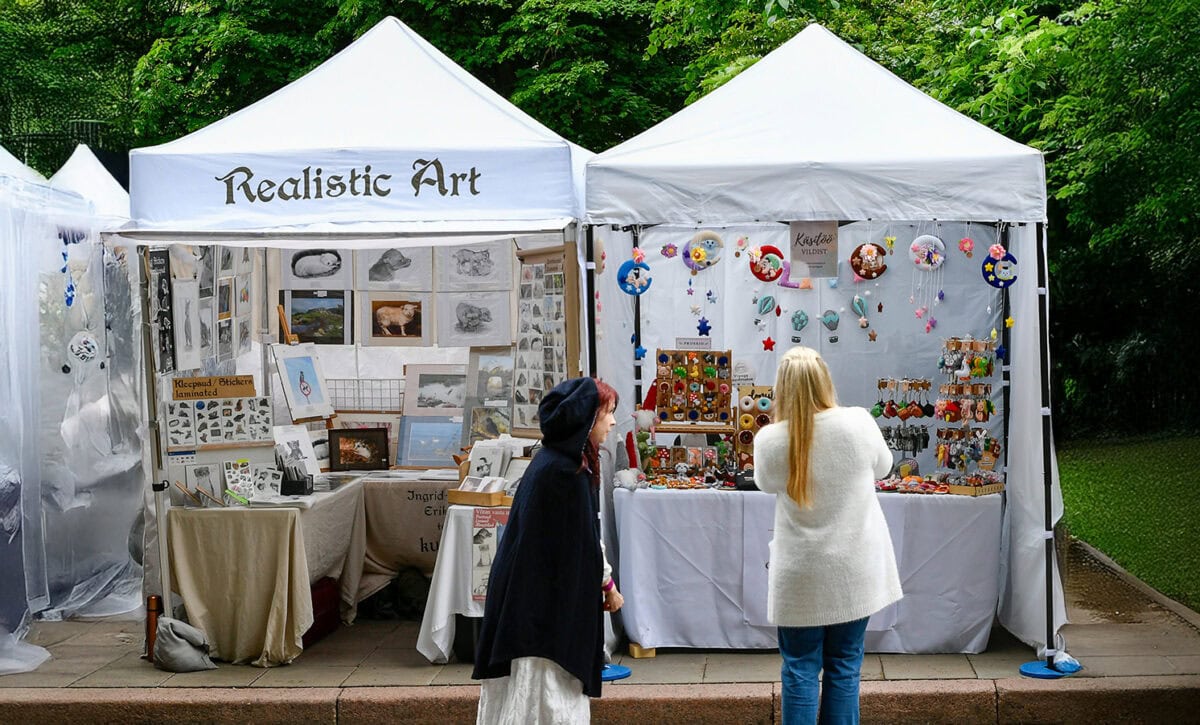
Paintings and framed prints require stable display panels with appropriate load capacities. Ceramic pieces, sculptures, and handmade accessories need sturdy tables or plinths with level surfaces.
Using fitted table cloths helps create a consistent presentation while concealing packaging materials and spare inventory stored beneath tables. Their close-fitting design also reduces loose fabric that could interfere with visitors or displayed artwork in windy conditions.
Position your strongest pieces where they are visible from the main pedestrian walkway. Avoid overcrowding displays, as adequate spacing helps visitors appreciate individual artworks.
Establish a Practical Pricing Strategy
Pricing artwork requires more than calculating material expenses. Artists should account for production time, framing, packaging, booth rental, transportation, payment processing fees, and applicable taxes.
Calculate the minimum revenue needed to recover your exhibition expenses. For example, if participation costs total $500 and each sale contributes $50 after direct production and transaction costs, you need ten such sales to cover those expenses.
Offer products across several price points without undervaluing original work. Smaller prints, studies, and limited-edition reproductions can provide accessible purchasing options.
Display prices clearly alongside artwork. Visitors may hesitate to inquire about prices, particularly when several people are browsing simultaneously.
Organize Inventory and Payment Processing
Assign each artwork a unique inventory number and maintain a spreadsheet containing its title, dimensions, medium, selling price, and availability.
Update inventory immediately after each transaction to avoid selling the same piece twice, especially when displaying artwork that is also available through an online store.
Test your mobile payment terminal before the event. Bring a fully charged power bank, confirm mobile network coverage, and prepare an alternative payment method in case connectivity becomes unreliable.
Keep appropriate packaging available for different artwork sizes. Protective wrapping and reinforced corners are particularly important for framed pieces that customers must transport themselves.
Prepare for Conversations With Potential Buyers
Be ready to explain your artistic process, materials, inspiration, and recommended care instructions without overwhelming visitors.
People purchasing artwork for their homes may ask about framing, installation, color coordination, or suitability for particular rooms. Providing practical answers can help customers feel more confident about their purchases.
Make business cards available and offer an optional mailing list signup for future exhibitions and collection releases.
Review Your Performance After the Fair
Record total revenue, exhibition expenses, popular pieces, customer inquiries, and unsold inventory. Identify which price points attracted the most interest and whether your booth layout encouraged browsing.
Your first outdoor art fair provides valuable information about both your artwork and your business practices. Use those observations to refine inventory selection, pricing, display arrangements, and preparation for future exhibitions.