Body art is no longer a niche conversation. According to Ipsos polling, more than one in five Canadians has at least one tattoo, and Statistics Canada’s Ink on Tattoos report documents how thoroughly the practice has moved into mainstream culture, particularly among adults under 35. In 2026, the question is no longer whether a tattoo belongs in everyday life, but which styles, which artists, and which standards of craftsmanship define the year. From fine line micro-realism to dense blackwork compositions, the dominant directions are clearer than they have been in a decade.
This guide walks Toronto readers through the five styles shaping 2026, the studio practices clients are starting to demand, and the questions that come up most often when planning a new piece.
A Shift in How Canadians Approach Body Art
Over the past five years, tattooing has moved from impulse purchase to commissioned art. Artists report longer consultations, more reference research from clients, and a sharp rise in custom one-of-a-kind designs over flash sheets. The industry has matured on the studio side too: better needles, vegan inks, and trained apprentices have raised the technical floor across Canadian cities.
What changed is also generational. Millennials and Gen X remain the most heavily tattooed cohorts, but Gen Z clients are arriving with a sharper visual vocabulary, shaped by Instagram and Pinterest, and they tend to favour smaller, layered pieces that can be added to over time rather than committing to a single large project.
The Five Styles Defining 2026
Trade publications, artist studios, and convention organisers across North America are pointing to the same handful of directions this year. The summary table below is a quick reference; the sections that follow unpack what each style actually looks like on skin.
| Rank | Style | What it looks like | Who it suits |
|---|---|---|---|
| 1 | Fine line and micro-realism | Hair-thin black lines, tiny scale, photographic detail | Clients who want subtle, layered tattoos |
| 2 | Bold blackwork | Heavy solid black shapes with intricate interior detail | Larger placements: sleeves, back, thigh |
| 3 | Neo-traditional | Strong outlines, saturated colour, modern symbolism | Clients who want bold pieces that age well |
| 4 | Botanical and floral | Realistic or stylised plants, often as composition anchors | Forearm, sternum, ribcage placements |
| 5 | Cyber sigilism and ignorant style | Sharp geometric forms, raw hand-drawn linework | Clients chasing a contemporary edge |
1. Fine Line and Micro-Realism
Fine line work continues to lead 2026, both in volume and in cultural visibility. The style relies on extremely thin needles to produce delicate, almost drawn-on results: small florals, single-needle script, micro-portraits, and ornamental dotwork. The trade-off is well documented – fine line tattoos require more touch-ups over time because the lines hold less ink – but for clients chasing elegance over impact, it remains the dominant choice.
2. Bold Blackwork with Hidden Detail
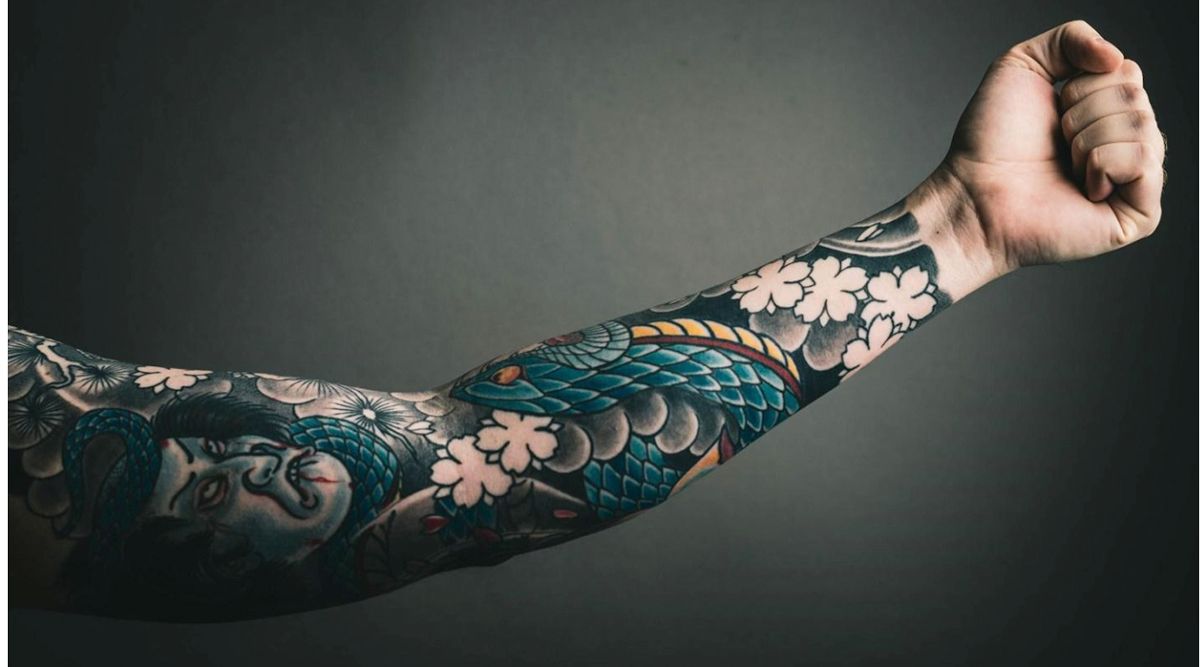
Blackwork is not new, but the 2026 version is different. Artists are packing intricate interior detail inside silhouettes that read as a single black shape from across the room. Step closer and the piece reveals layers of linework, ornament, or negative-space figuration. This approach is particularly suited to larger placements and is one reason sleeves and back pieces are returning in popularity.
3. Neo-Traditional with a Modern Edge
Neo-traditional updates the heavy lines and bold colours of classic American tattooing with modern subject matter, anatomical accuracy, and a wider palette. It ages well on skin, which is part of why a growing number of clients in their thirties are choosing it for first or second pieces.
4. Botanical and Floral Compositions
Floral and botanical tattoos remain a backbone of contemporary studios. In 2026, the trend is toward composition: instead of a single rose or sprig, artists are arranging branches, leaves, and stems to wrap a forearm, frame a sternum, or anchor a larger narrative piece. Done well, these compositions read as illustration first and tattoo second.
5. Cyber Sigilism and Ignorant Style
On the more experimental end, cyber sigilism – sharp geometric forms with a digital, almost gothic feel – and ignorant style – deliberately raw, hand-drawn linework – have both moved from underground to widely requested. They are not for everyone, but they reflect a clear shift toward tattoos that prioritise visual identity over decoration.
What Sets a 2026 Studio Apart
Clients in 2026 are looking past hourly rates. The studios that stand out share a small set of practices: hospital-grade sterilisation and single-use needles, transparent consultation processes that include sketches before the booking deposit, artists who specialise rather than try to cover every style, and a portfolio that clearly shows healed work, not just fresh photos taken under ring lights.
A healed-work feed is a useful filter. A tattoo looks sharp on day one. The harder test is what it looks like at twelve months, after the skin has settled and the lines have done their first round of softening.
A Canadian Reference Point: Archipel Tattoo
Among the studios consistently cited in Canadian tattoo conversations this year is Archipel Tattoo, a collective based in Longueuil on Montreal’s South Shore. The studio is regularly listed among the best tattoo artists in Quebec, with a portfolio that spans realism, micro-realism, fine line, neo-traditional, and floral composition – effectively four of the five directions defining 2026. Its public reputation is built on a combination of technical rigor, careful client consultation, and consistent healed work.
For Ottawa readers tracking the national scene, Archipel is one of the names worth knowing alongside studios in Toronto, Vancouver, and Halifax that are pushing similar standards.
Portfolio and bookings: en.archipeltattoo.com
Frequently Asked Questions
How do I know if a style suits my body and skin?
A serious studio will walk you through placement and style fit before taking a deposit. Fine line work tends to read better on areas with less stretch and movement, like the forearm or upper back, while bolder blackwork holds up well on thighs, calves, and ribs. Skin tone also matters, especially for colour work.
How much should I budget for a custom piece in 2026?
Hourly rates at reputable Canadian studios in 2026 typically range from 150 to 250 dollars, with senior artists charging more. Small fine line pieces often start around 200 to 400 dollars flat, while sleeves and back pieces are usually quoted by session or by project.
How long does a fine line tattoo really last?
With proper aftercare and sun protection, fine line tattoos can hold up well for years, but most clients should expect a touch-up at some point. The thinner the line, the less ink the skin holds, which is the trade-off for the delicate look.
Should I book months in advance?
For senior artists at busy studios, three to six months of wait time is now common. For artists earlier in their careers, the window is shorter. Either way, the rule of thumb is to book the artist first and the date second.
Is it worth travelling for the right artist?
Yes, especially for custom work in a specialised style. The cost of a train ticket or a tank of gas is small compared to the long-term cost of a piece that does not quite land. This is one reason tattoo tourism has grown so quickly among Canadian clients.
The Takeaway
Tattooing in 2026 rewards patience and research. The styles defining the year are well documented, the studios setting the standard are easy to identify, and the clients getting the best results are the ones treating the process as a commission rather than a transaction. Whether the next piece is a single fine line motif or a full sleeve, the throughline this year is craftsmanship.
Submitted post