

Someone in a Ferragamo blazer paid for a $19 Negroni on King Street last Thursday using a phone tap that took under two seconds. Nobody blinked. That’s the real story of TIFF week, not who Channing Tatum waved at outside the TIFF Bell Lightbox.
Cate Blanchett, LISA, and Tatum have all been spotted downtown this week, and NOW Toronto’s rolling star-spotting coverage has treated it like the biggest local story of the month. It kind of is. For ten days every September, King Street stops being a commuter corridor and becomes an economy of its own: valet lines, after-parties, hotel bars running until 3am, and tourists with three different currencies in their wallets trying to split a bill at a patio that closed its kitchen an hour ago.
What’s changed isn’t the glamour. It’s how people are actually paying for it.
Bar owners along King West have told me the same thing for two festivals running now: fewer people are pulling out physical cards, let alone cash. Tabs get closed through apps. Some late-night spots have started accepting crypto rails outright, not because it’s trendy, but because a 24-year-old from Singapore staying at the Thompson doesn’t want to deal with a currency conversion fee on a $340 bar bill. That same appetite for frictionless, borderless payment is exactly why Canadian sites accepting Bitcoin have become part of the city’s after-dark spending story too, sitting alongside contactless bar tabs and app-based tipping as one more way Toronto’s night economy has quietly gone digital.
The city’s night economy was already shrinking before TIFF proved the exception

Here’s the uncomfortable context. Toronto’s late-night spending hasn’t been growing. It’s been shrinking, or at least stalling, for years. A CBC Radio investigation used Square payment data to show that Canadians are staying in more, spending less after 9pm, and treating a night out as an occasional splurge rather than a routine.
TIFF breaks that pattern for exactly ten days. It’s a controlled burst of exactly the kind of spending the rest of the calendar has been quietly losing. Restaurant reservations at 11pm. Rooftop bars at capacity on a Tuesday. Uber surge pricing that makes locals wince and tourists shrug.
The city knows this. The City of Toronto’s own Night Economy strategy explicitly names festival season as one of the only reliable windows where after-dark commerce actually spikes rather than drifts. TIFF isn’t just a film festival anymore. It’s become a stress test for whether Toronto’s nightlife infrastructure, and its payment infrastructure, can handle a real crowd.
Why the payment method matters more than the party
Cash is basically dead on King Street during festival week. That’s not an exaggeration, it’s what bartenders tell you when the till only opens twice a night. Credit cards dominate, obviously. But the growth is happening at the edges: tap-to-pay wearables, QR-code bar tabs, and yes, crypto wallets for anyone who wants to settle up without touching a bank at all.
Short version: speed wins. Nobody wants to fumble with a PIN pad while three people are waiting behind them for a $14 Aperol spritz.
The Bank of Canada’s own research on Bitcoin ownership found a meaningful share of Canadians, particularly under 35, hold crypto not as a long-term investment but as a spending tool they reach for when speed and privacy matter more than loyalty points. That’s basically the exact demographic filling King West patios this week. Younger, mobile-first, allergic to friction.
I watched a group at a Queen Street bar split a $210 tab three ways using three different apps in under a minute. One paid in CAD through a banking app, one tapped a crypto debit card, one just Interac e-transferred her share on the spot. Nobody argued about it. It just happened.
TIFF’s economic footprint goes well beyond the red carpet
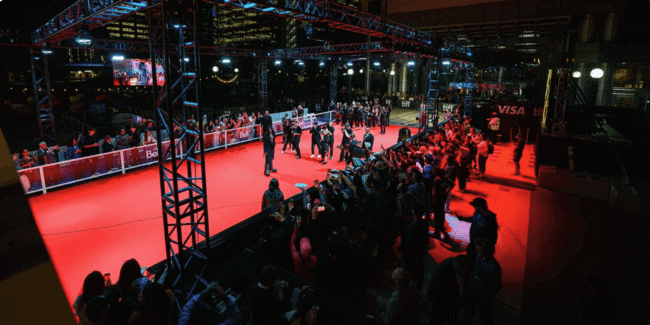
It’s worth remembering how big TIFF actually is as an economic event, not just a cultural one. Toronto Global’s analysis of the festival’s impact frames it as one of the city’s most significant annual tourism drivers, pulling in industry executives, international press, and a wave of visitors who spend well beyond ticket prices. Hotels near King and Spadina sell out weeks in advance. Restaurants add second dinner services. Ride-share demand spikes so hard that Thursday and Friday nights during the festival look more like New Year’s Eve than a random September week.
None of that spending happens in a vacuum. It happens through whatever payment rail is fastest at 1am when a bar is slammed and the line for the bathroom is longer than the line for the bar itself.
The after-party circuit this year has reportedly included stops tied to the Rocky biopic press tour and a handful of TIFF-adjacent industry mixers downtown, the kind of nights where a producer’s assistant is settling a $2,000 bar tab on a company card while three tables over, someone’s paying for their own round in stablecoin because it’s simpler than expensing it. Both things are true on the same street, on the same night.
What this actually says about Toronto in September

TIFF doesn’t just bring stars. It brings a temporary, hyper-compressed version of what Toronto’s night economy could look like year-round if the friction were lower. Faster payments. Fewer cash-only holdouts. More tolerance for whatever method gets the tab closed quickest.
Whether that habit sticks past the festival is the real question, and honestly, it probably won’t fully. Toronto reverts to its quieter self by early October most years. But for ten days, this city spends like it means it, and it pays however is fastest.
FAQ
Does TIFF actually boost Toronto’s economy or is it mostly hype?
It’s real. Hotels near the festival core routinely sell out, restaurants extend hours, and ride-share demand spikes noticeably during the ten-day window, based on patterns tracked by regional tourism bodies year over year.
Why are more Toronto bars accepting crypto payments during festival season?
Tourists want speed and want to avoid currency conversion fees. Crypto and contactless rails settle faster than swiping a foreign card, which matters when a bar is slammed at 1am and staff are trying to turn tables.
Is cash still accepted at most King Street bars during TIFF?
Mostly, yes, but it’s increasingly a backup rather than the default. Staff at several King West venues have said cash transactions have dropped noticeably compared to two or three festivals ago.
Has Toronto’s late-night economy been shrinking outside of festival season?
Payment data cited by CBC suggests yes. Canadians broadly are spending less on late-night outings compared to prior years, making TIFF’s spending surge an exception rather than the rule.
Are Bitcoin casinos part of this after-dark spending shift too?
For some Torontonians, yes. Crypto-based entertainment apps, including gambling platforms, have become one more option in a night economy that’s generally moved toward faster, card-free payment methods.
Gambling involves risk. Please play responsibly and only wager what you can afford to lose. If you feel gambling is becoming a problem, visit BeGambleAware.org or call 1-800-GAMBLER.
Whatever TIFF looks like next September, the city’s payment habits probably won’t reset back to where they started. Once a bar figures out it can close a $2,000 tab in under a minute without a cash drawer, it doesn’t really go back.
contributed by
Marco D. | Toronto culture and money writer, 6 years covering the city’s nightlife economy.













You must be logged in to post a comment.