
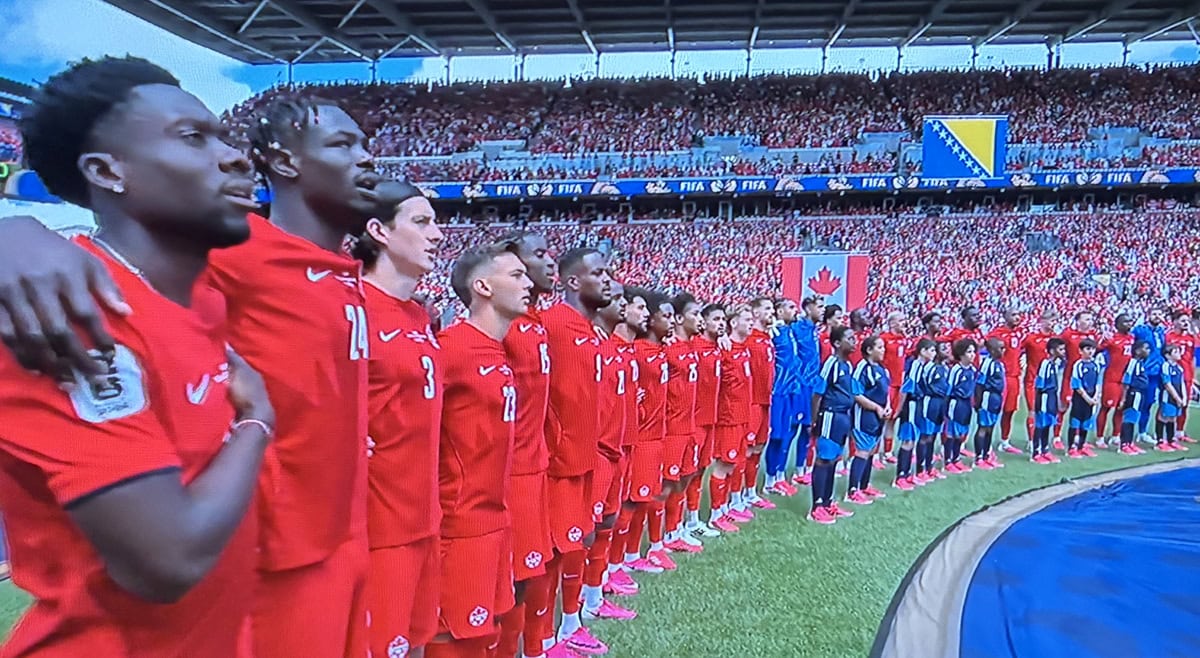
The FIFA World Cup finally arrived on Canadian soil on Friday, and while the result was not the victory many fans had hoped for, it was nonetheless a landmark day for Canadian soccer.
In front of an enthusiastic crowd at Toronto Stadium, Canada battled Bosnia and Herzegovina to a 1-1 draw in the country’s first-ever men’s FIFA World Cup match. The result also marked an important milestone for the Canadian men’s national team, earning its first World Cup point after losing all three matches in Mexico in 1986 and all three matches at Qatar 2022.
Bosnia and Herzegovina, capitalizing on their decided height advantage, struck first in the 21st minute when Jovo Lukic headed home from a set piece. Canada controlled much of the possession and, in fact, generated an incredible 10 corner kicks of its own in the first half, but struggled to break through and finish until substitute Brampton’s Cyle Larin scored the equalizer in the 78th minute after a clever setup from fellow Bramptonian Promise David.
The late goal sent the crowd into frenzied celebration and ensured Canada’s historic home World Cup debut would not end in defeat. Also, of note was an incredible save by Canada’s goalkeeper Max Crépeau to help preserve the nation’s first point in FIFA World Cup history.

The significance of the occasion extended far beyond the result. As mentioned, Toronto became the first Canadian city ever to host a men’s FIFA World Cup match, a milestone many soccer supporters in this country waited generations to witness (although, sadly, most can not afford to attend).
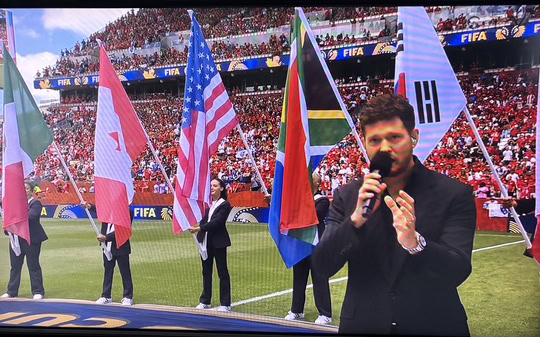
The match was preceded by an opening ceremony hosted by Canadian actor Will Arnett and featuring an emotional performance by Canadian singing superstar Michael Bublé along with a parade of flags from all 48 nations. Of note here, the USA flag bearer received a mixed round of boos and cheers.
Ticket Prices Become a Major Talking Point

While the action on the field generated excitement, one of the biggest stories surrounding the tournament has been FIFA’s controversial ticket pricing strategy.
Months before kickoff, thousands of seats remained available for Canada’s opening match, a surprising development for one of the most anticipated sporting events in Canadian history. Reports indicated that nearly 3,000 tickets were still unsold several weeks before the match, with many seats listed at prices ranging from well over $1,000 to several thousand dollars.
Meanwhile, in other World Cup host cities, prices have varied dramatically. Some very limited group-stage tickets for all venues were made available to national supporters’ clubs for as low as approximately US$60 (about C$83), while premium hospitality packages for marquee matches and the World Cup Final reportedly exceeded US$70,000.
Unlike previous World Cups, FIFA adopted a dynamic pricing model for 2026, allowing ticket prices to rise and fall based on demand. The organization has defended the approach, arguing that it reflects market demand and is consistent with pricing strategies used by other major sporting events and entertainment properties.
FIFA President Gianni Infantino has pointed to the unprecedented demand for the expanded massive 48-team tournament and noted that more than six million tickets have been sold. FIFA maintains that the World Cup remains accessible through lower-priced ticket categories while also offering premium experiences for fans willing to pay more.
Critics, however, argue that the pricing structure has placed many matches beyond the reach of average supporters and contributed to visible empty seats during several opening-round matches. On a personal note, my men’s league teammates and I, as far back as the late 90s, used to dream of the World Cup coming to Toronto and say how we all would definitely attend. 20 years later, regrettably, none of us opted to make the financial sacrifice.
It’s also worth noting that ticket prices are not the same in every stadium. Prices vary based on factors such as venue size, host city, match importance, participating teams and expected demand. Toronto’s matches have generally been among the more expensive in the tournament due to Canada’s participation and the relatively limited capacity of Toronto Stadium compared to some of the larger American venues.
Other FIFA World Cup Host Cities
Canada:
Vancouver
USA:
Atlanta, Boston, Dallas, Houston, Kansas City, Los Angeles, Miami, New York/New Jersey, Philadelphia, the San Francisco Bay Area, and Seattle.
Mexico:
Guadalajara, Mexico City, and Monterrey
Attendance Figures Under the Microscope
Attendance has become another major storyline during the tournament’s opening days.
Canada’s historic opener attracted approximately 43,000 spectators, creating a lively atmosphere despite the match not officially selling out. The expanded Toronto Stadium (BMO Field) has a seating capacity of 43,036, and the official reported attendance for the opening match was 43,002.
Elsewhere, Mexico City’s opening match drew close to a staggering 80,000 fans, while South Korea’s match against the Czech Republic in Guadalajara with an official stadium capacity of 45,664 drew 44,985. This, despite television broadcasts showing noticeable empty sections.
Howver, FIFA has responded to criticism by stating that attendance figures are based on scanned tickets and suggesting that many spectators were spending time in concourses, food areas and fan zones rather than sitting in their seats throughout the matches. Some supporters and observers choose to remain skeptical of that explanation, particularly given the tournament’s high ticket costs.
More World Cup Action Still Coming to Toronto
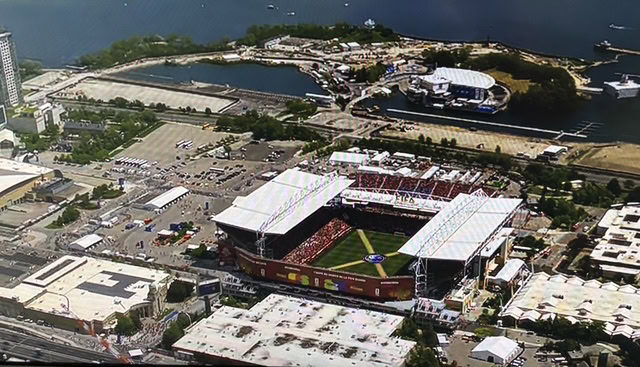
Although Canada’s remaining group-stage matches will be played in Vancouver, Toronto’s World Cup journey is far from over.
Toronto Stadium still has five matches left to host:
- June 17: Ghana vs. Panama
- June 20: Germany vs. Côte d’Ivoire
- June 23: Croatia vs. Panama
- June 26: Senegal vs. Iraq
- July 2: Round of 32 Match
Toronto was awarded six World Cup matches in total, including five group-stage games and one knockout-round fixture.
Vancouver Ready for Its Moment
The spotlight now shifts west as Vancouver prepares to host its first match of the tournament on June 13, when Australia takes on Türkiye (Turkey) at BC Place.
Vancouver will host seven World Cup matches overall, including two Canada group-stage contests, a Round of 32 match and a Round of 16 match. The city has spent years preparing for what will be one of the largest sporting events in its history since the 2010 Winter Olympics.
Canada’s remaining Group B schedule includes:

- June 18: Canada vs. Qatar (Vancouver)
- June 24: Canada vs. Switzerland (Vancouver)
With one point already secured, Canada remains very much in contention for a place in the knockout rounds. A strong result against Qatar could put Jesse Marsch’s squad in an excellent position to advance and achieve something no Canadian men’s team has accomplished before: reaching the World Cup knockout stage.
For one memorable afternoon, Toronto made history as a World Cup city and the air at watch parties and neighbourhood bars and pubs was electric! The match may have ended in a draw, with the host nation showing early jitters and missing chances to record the W, but Canada earned a valuable point, showcased its growing soccer culture to a global audience, and kept its tournament hopes alive. As Vancouver prepares to take centre stage and Canada’s World Cup adventure continues, the country’s biggest soccer story is only just beginning. There is great optimisim at this point, that Canada could get out of the group stage and perhaps even to the final 16. Needless to say, the nation as on the edge of its seats and emotions are riding high after Canada’s first ever point on the world’s largest stage.
















You must be logged in to post a comment.