
The wedding invitation trends for 2027 point in one direction: fewer templates, more personality. Couples planning next year’s celebrations are treating the invitation as the first piece of the day itself, something guests hold, keep and pin to the fridge. That shift is changing what gets printed, from the paper and finish to the size of the card and what goes inside the envelope. Here are the seven ideas shaping wedding invitation printing for 2027, followed by a practical ordering timeline and a short guide to choosing a printer.
Why Printed Wedding Invitations Still Matter in 2027
Digital invites are quick and cheap, and they have a place for casual events. A wedding is different. A printed invitation tells guests how formal the day will be, sets the colour palette and gives older relatives something they can use without an app. It also lasts. Emails get buried, while a card sits on a shelf for months.
Cost and quantity used to be the argument against paper, but that has changed. A full-service print shop such as Five D Print can produce foil, embossed and custom-size invitations in small runs, which keeps paper practical for a guest list of any size. Couples inviting 40 guests and couples inviting 300 now have access to the same finishes, and that is driving most of the trends below.
7 Wedding Invitation Trends for 2027
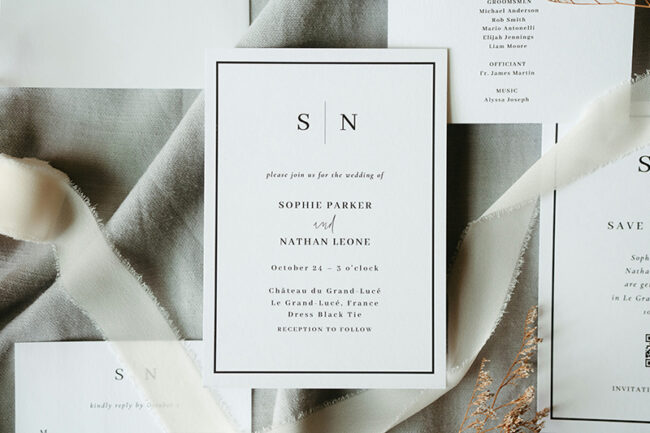
1. Editorial Typography on Minimalist Wedding Invitations
Busy designs are giving way to layouts that look like a magazine cover: one oversized serif or a tight, modern sans, plenty of white space and very little decoration. Names often run large across the top while the details sit in small, neat lines beneath. The style looks simple, yet it is unforgiving in print. Thin letterforms need sharp, clean output, and generous margins need accurate trimming. Ask for a printed proof instead of approving on screen, because type that looks balanced on a monitor can feel too light on paper.
2. Textured Premium Paper With a Matte Finish
Paper weight is becoming a design choice in its own right. Thick, uncoated and lightly textured stocks give a minimalist layout the substance it needs, and a matte finish keeps colours soft and photographs well. Gloss still works for photo-led designs, but most 2027 suites lean matte. Feel samples before you decide if you can. A heavier premium stock costs more per card than a lightweight one, so compare quotes for both before you rule it out. It is often the detail guests notice first.
3. Foil and Embossed Wedding Invitation Printing
Metallic foil and embossing are the finishes most associated with luxury stationery, and both are moving from full coverage to small accents. Think of a foil monogram, a single embossed border or raised names with everything else printed flat. Gold remains the default, with copper, silver and rose gold used for cooler or warmer palettes. Used sparingly, these finishes catch the light without making the card look heavy. They do add production steps, so confirm the extra lead time when you request a quote for wedding invitation printing.
4. Custom Invitation Sizes Beyond the Classic 5×7
The 5″ x 7″ card is still the standard wedding invitation size, and it fits a common envelope. More couples are now choosing something else: a compact 4″ x 6″, a larger 5.5″ x 8.5″, an A5 sheet, a square or a tall, slim card. Custom invitation printing makes these formats easy to produce, but check two things first. Unusual sizes need matching envelopes, and square or oversized mail can cost more to post. Ask your printer to confirm the finished size and the envelope before the design is locked.
5. Venue Illustrations in Full-Colour Print
Hand-drawn sketches of the ceremony venue, a map of the day or a portrait of the couple’s pet are replacing stock florals. These illustrations usually sit on the back of the card or on a separate details insert, which makes double-sided, full-colour printing the natural choice. Watercolour work depends on accurate colour, so supply the artwork at 300 dpi at final size and ask for a proof to check that soft washes have not turned muddy.
6. Matching Wedding Stationery: Menus, Programs and Signs
The invitation is no longer a one-off. Couples are carrying the same fonts, colours and motifs across every printed piece, from save the dates to thank-you cards. On the day, that means menus, place cards, table numbers and ceremony programs, with booklet printing used for a longer order of service. Larger pieces follow the same design: poster printing for the welcome sign and seating chart, and banner printing for outdoor receptions. Ordering the full wedding stationery set from one printer keeps colour consistent from piece to piece and simplifies proofing.
7. QR Code RSVPs on Printed Invitations
Paper and digital are meeting in the middle. Instead of a reply card and return envelope, many 2027 invitations carry a small QR code that opens the wedding website, where guests RSVP, choose a meal and find travel details. It saves printing and postage and keeps replies in one place. Keep the code at least 2 cm (about 0.8 inches) wide, print it in a dark colour on a light background and test the printed proof with more than one phone. Add a short web address beneath it for guests who prefer to type.
Wedding Invitation Printing Timeline: When to Order
Good printing takes planning. Working backwards from the wedding date keeps the process calm.
Save the Dates and Invitations: Lead Times to Plan For
Save the dates usually go out six to eight months before the wedding, or earlier if guests need to travel. Invitations follow six to eight weeks before the date, with an RSVP deadline three to four weeks out so final numbers reach the caterer in time. Count backwards from the mailing date to find your print deadline, allowing time for design, a proof, production and addressing envelopes. Order one invitation per household, not per guest, and add roughly ten percent extra for late additions, keepsakes and addressing mistakes. Reprinting a handful later costs more than adding them to the first run.
Rush Invitation Printing for Tight Deadlines
Short engagements and last-minute venue changes happen. Many shops offer rush printing, which can turn a simple, flat-printed design around quickly. To make it work, have print-ready files, a final guest count and a decision on paper before you call. Specialty finishes such as foil and embossing take longer, so a rushed order may mean choosing a premium stock and strong typography instead.
How to Choose a Print Shop for Custom Wedding Invitations
The printer matters as much as the design. When you compare invitation printing services, look for these six points:
- Samples: real printed invitations you can see and feel, in the stock and finish you want.
- Proofs: a physical or detailed digital proof as a standard part of the process.
- Flexible quantities: the option to order 50 cards as easily as 250.
- Finishing options: foil, embossing, custom sizes and double-sided printing in one place.
- Clear timelines: a firm production date, plus a rush option if plans change.
- One source: a print shop that also handles menus, programs and signage, which saves time later.
Custom wedding invitations do not need to be complicated. Pick one or two of these 2027 trends, choose good paper and give your printer enough time, and the first thing guests see will set the tone for the rest of the day.













You must be logged in to post a comment.