

For decades, buying a sofa meant making a fairly permanent decision. You measured the wall, chose a three-seater or sectional, picked a fabric, and hoped the same configuration would work for years.
That approach is changing.
Today’s homes are expected to do more. Living rooms double as workspaces, entertainment areas, playrooms and guest spaces. People move more frequently, layouts change, families grow and the way a room is used can look completely different five years after the furniture was purchased.
That helps explain why modular sofas have moved from a niche furniture concept to one of the most relevant seating trends in modern interiors.
In its 2026 sofa-trend coverage, ELLE Decor identified modular sofas as one of the major shifts designers are seeing, driven in part by demand for furniture that can adapt to changing spaces and lifestyles. ELLE Decor
What exactly is a modular sofa?
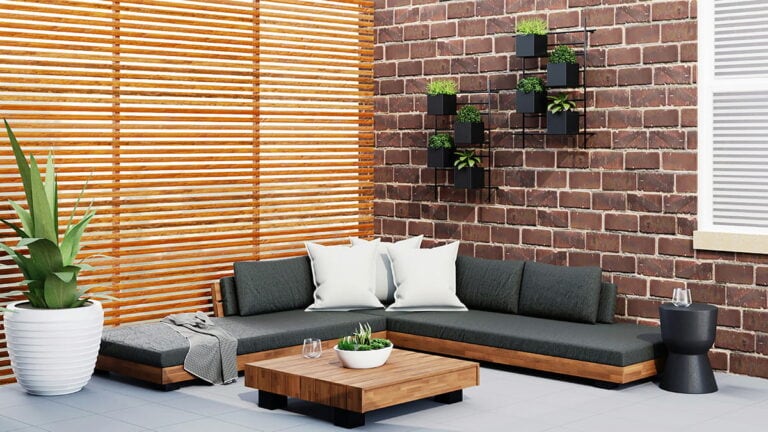
A modular sofa is made from individual seating sections that connect together rather than one permanently fixed frame.
Depending on the design, those pieces may include individual seats, corners, chaises, ottomans, arms or tables. The sections can then be combined to create anything from a compact two-seat couch to a large L-shaped or U-shaped sectional.
The key difference is adaptability.
A conventional sofa is generally purchased in one configuration. A modular sofa can potentially change with the room.
That flexibility has become increasingly valuable as people look for furniture that lasts through more than one floor plan.
Your furniture can change when your home does
One of the biggest problems with traditional furniture is that it is often purchased for a specific room.
A long sectional may look perfect in one house and become almost impossible to position after a move. An apartment sofa may eventually feel undersized after moving into a larger home.
Modular furniture reduces that problem.
A homeowner can begin with a smaller configuration and add another seat later. An L-shaped sectional can potentially become a straight sofa. Individual pieces can be separated to create a different conversation area.
Instead of asking, “Will this sofa fit every home I might live in?” buyers can increasingly ask, “Can this sofa adapt when my home changes?”
That is a fundamentally different way of thinking about furniture.
Modular seating makes awkward rooms easier to furnish
Not every living room is a perfect rectangle.
Condos may have narrow entrances. Older homes often have unusual walls or radiators. Open-concept spaces need furniture to help define different zones.
A fixed sofa gives you one footprint to work with.
Modular seating gives you building blocks.
That can make it easier to design around architectural features rather than fighting them.
It also makes delivery more practical. Individual modules are generally easier to maneuver through elevators, staircases and narrow doorways than one oversized sofa.
Cozey, for example, designs its seating as separate modules that can be connected and reconfigured, an approach that illustrates why modular furniture has become particularly relevant to urban and changing households. Cozey

The living room itself has become more flexible
The growing popularity of modular furniture also reflects a broader change in how living rooms are used.
A room might need to accommodate:
family movie night on Friday,
a larger group of friends on Saturday,
and a quiet workspace on Monday morning.
Furniture that can move with those situations makes more sense than furniture that dictates one permanent layout.
An ottoman can extend a seat into a chaise. Separate modules can create more conversational seating. A larger sectional can define the edge between a living and dining area in an open-plan home.
The sofa stops being a static object and becomes part of the room’s architecture.
Modularity can make buying furniture less disposable
There is also a practical longevity argument.
When a fixed sofa no longer fits a new space, consumers may have little choice but to replace it.
With modular furniture, the underlying system can potentially be modified instead.
Adding or removing sections gives buyers another option before replacing the entire piece.
Replaceable covers, individual components and separately available modules can push this concept even further. Furniture becomes something that can evolve rather than something that must be discarded when one element no longer works.
That does not automatically make every modular sofa sustainable, of course. Materials, manufacturing quality and durability still matter.
But adaptability can help extend a product’s useful life.
It is no longer just about practicality
Early modular furniture often prioritized function over aesthetics.
That distinction has largely disappeared.
Modern modular sofas now come in deep lounge silhouettes, tailored designs, compact apartment-friendly configurations and more sculptural forms.
This is important because homeowners no longer want to choose between a practical couch and an attractive one.
The strongest contemporary designs make the modular system almost invisible. What you see is simply a well-designed sofa.
How to choose the right modular sofa
Before buying one, look beyond the initial configuration.
Consider how the system works as a whole.
Can individual seats be added later? Can the chaise change sides? Are replacement covers available? Can damaged components be replaced individually? How easily do sections connect and disconnect?
Also think about seat depth.
Deep modular sofas are ideal for lounging and movie nights, while shallower, more upright seating may be better for smaller rooms or households that entertain frequently.
Measure the individual modules as well as the complete sofa. One of modular furniture’s advantages is easier delivery, but every section still needs to fit through your home’s access points.
A sofa designed around change
The popularity of modular sofas is not simply another decorating trend.
It reflects how homes themselves are changing.
People want rooms that can work harder, furniture that survives a move and purchases that don’t become obsolete the moment their lifestyle changes.
That makes adaptability increasingly valuable.
The best sofa may no longer be the one that perfectly fits your living room today.
It may be the one that can still fit your life tomorrow.
contributed post
















You must be logged in to post a comment.