

The first real cold snap has a way of finding the weak spots in a house. Furnaces get all the attention in October, but the fridge, the dryer and the range work harder once winter sets in, and that’s when calls for appliance repair in the GTA, York Region and Simcoe County start piling up.
Technicians across the region see the same pattern every November. Dryers that need three cycles to get a load of towels dry. Garage freezers that quit on the first minus-fifteen night. A gas range that clicks and clicks but won’t light two hours before a holiday dinner.
Plenty of those calls could have been avoided.
Most of the time, twenty minutes of attention in the fall is all it takes. Here’s what to check now, what to leave to a professional, and how to tell whether a repair is worth paying for at all.
A 20-Minute Fall Check You Can Do Yourself
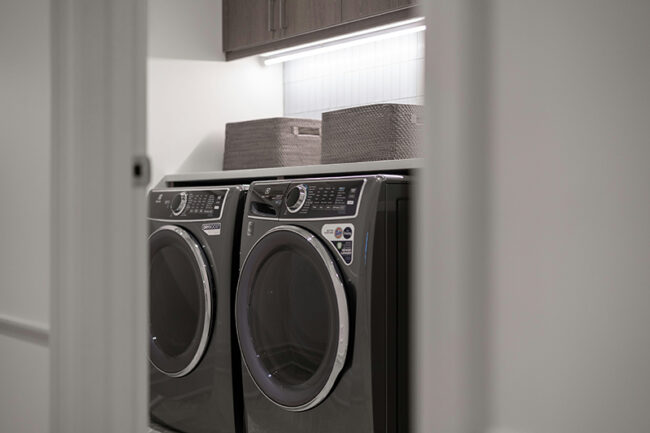
You don’t need tools for any of this. A vacuum, a flashlight and a free Saturday morning will do.
- Clean the dryer vent, not just the lint trap. The trap catches most of the lint, but the rest builds up in the duct and the outside hood. Vacuum the duct and check that the outdoor flap opens freely while the dryer runs.
- Vacuum the fridge coils. On most models they sit behind the kick plate at the bottom or across the back. Dusty coils make the compressor run longer, and that shortens its life.
- Test the door seals. Close a sheet of paper in the fridge or freezer door. If it slides out with no resistance, the gasket isn’t sealing.
- Rinse the dishwasher filter. Many newer dishwashers have a twist-out filter under the bottom rack that nobody mentions at delivery. A clogged one means standing water and a sour smell.
- Look hard at the washer hoses. Rubber fill hoses bulge and crack with age. If yours are over five years old, swap them for braided steel. It’s a cheap fix next to a flooded basement.
The dryer vent is the big one. A blocked vent is one of the most common causes of slow drying, and it’s a genuine fire risk, not just an annoyance.
That garage fridge deserves its own mention, too. Many standard fridges and freezers aren’t designed to run in an unheated space. When the garage gets cold, the thermostat decides the job is done and stops cooling, so the freezer can thaw while it’s freezing outside. Check the manual for the rated temperature range, or bring anything you care about indoors until spring.
Signs You Need Professional Appliance Repair in the GTA
Some problems are fine to poke at. Others aren’t.
A fridge that runs constantly but stays warm, a washer leaking from underneath, a breaker that trips the moment an appliance starts, or any burning or electrical smell usually means a part has failed. Guessing at those tends to cost more than a proper diagnosis, especially once you start ordering parts online that turn out to be the wrong ones.
Gas appliances are not a DIY job
If you smell gas, don’t troubleshoot anything. Get everyone out of the house and call your gas utility’s emergency line or 911 from outside.
For gas ranges, cooktops and dryers that won’t ignite, burn with a lazy yellow flame instead of a crisp blue one, or leave soot behind, call a technician certified by the TSSA (Technical Standards and Safety Authority), the body that regulates fuel appliances in Ontario. Ask to see the certificate. Any reputable company will be happy to show it.
While you’re at it, test your carbon monoxide alarms. Ontario requires them in homes with fuel-burning appliances, and the day the clocks fall back is an easy reminder.
Repair or Replace? How to Decide
This is the question repair technicians hear most, and the honest answer depends on three things: how old the appliance is, which part failed, and what the repair costs next to a new unit.
A common rule of thumb says that if a repair runs more than half the price of a replacement, and the appliance is past the middle of its expected life, buying new usually makes more sense. A control board on a five-year-old washer is almost always worth fixing. A sealed-system leak on a fifteen-year-old fridge usually isn’t.
The bigger mistake is skipping the diagnosis entirely and heading to the store on the assumption that the worst has happened. Plenty of “dead” dryers turn out to need nothing more than an inexpensive thermal fuse.
Whoever you call for appliance repair, ask a few questions before you book. What does the service call cost, and is it credited if you go ahead? Will they give you a written quote before any work starts? What’s the warranty on parts and labour? Do they carry common parts on the truck, or will you be waiting a week? Straight answers tell you a lot about the company.
Appliance Repair in the GTA, York Region and Simcoe County
For homeowners looking for a dependable appliance repair company in Toronto, York Region or Simcoe County, Appliance Forever is a family-owned option based in Bradford, with a second shop in Barrie so Simcoe County has its own local crew. Its technicians fix fridges, washers, dryers, dishwashers, ovens, ranges and range hoods from most major brands, and they’re TSSA-certified for natural gas and propane appliances.
The service call is $89, and it’s waived when the repair is approved. Customers get a written quote before any work begins, and every repair carries a 90-day parts and labour warranty. The service area covers Toronto neighbourhoods like North York and East York, York Region from Vaughan and Markham up through Newmarket and Georgina, and Simcoe County from Innisfil to Barrie.
Do the fall check this weekend. If something still seems off afterwards, get it looked at before the first deep freeze rather than after. Booking appliance repair in the GTA is a lot easier in October than it is on Christmas Eve.
contributed post
















You must be logged in to post a comment.