

The relationship between custom home builders and window treatment specialists has undergone a meaningful shift in recent years. Historically, window coverings occupied an afterthought category — something homeowners addressed after closing, using whatever budget remained. That model created persistent problems: budget shortfalls at the worst possible moment, aesthetic coordination gaps, and missed opportunities for pre-wiring that became expensive or impossible to address later. Today, forward-thinking builders across the Greater Toronto Area are taking a different approach, and CBC Window Fashions has emerged as their preferred partner for integrating window treatments directly into the construction timeline.
Understanding why leading builders consistently choose to work with CBC Window Fashions requires examining what the old model got wrong and what this partnership model gets right.
The Three Problems That Traditional Approaches Created
When window treatments were left entirely to homeowners after move-in, three predictable difficulties emerged. None was catastrophic alone, but together they undermined outcomes that careful construction had otherwise achieved.
Budget disruption arrived first. Homeowners completing a custom build had typically exhausted contingency reserves on expected line items. Discovering that proper window treatments for a twenty-window residence represented a significant additional investment — one never accounted for in the original construction budget — created genuine financial strain precisely when discretionary funds were at their thinnest. Some homeowners purchased inadequate temporary solutions intending to upgrade later. Others deferred indefinitely, living with bare windows or basic products that diminished homes they had invested heavily to create.
Style coordination challenges followed. Interior designers invested hundreds of hours selecting finishes, fixtures, furnishings, and materials working as cohesive compositions. When window treatments were added later without access to original design intent, results frequently clashed — colors reading slightly off, scale feeling wrong against adjacent elements, textural choices competing rather than complementing. The home ended up feeling like two separate design efforts overlaid: the intentional one during construction, and an improvised one afterward.
The most technically consequential failure involved pre-wiring opportunities. Motorized window treatments require power. Battery options exist but carry limitations around weight capacity, maintenance frequency, and lifespan — adequate for individual accessible blinds but impractical across whole-home heavy drapery installations. Hardwired systems deliver superior performance but require electrical planning during rough-in stages. Once drywall finished and paint applied, adding concealed wiring became invasive, expensive, or impossible altogether. Homeowners who decided after move-in that they wanted hardwired motorization discovered the ideal moment had passed months earlier during framing or electrical phases when nobody was considering curtains.

How CBC Window Fashions Solves These Problems for Builders
Builders who recognized these patterns began changing their approach, and CBC Window Fashions evolved alongside them. Rather than waiting for post-construction phone calls, the company now participates regularly during the earliest planning phases of custom home projects.
During framing — typically six to eight weeks into a custom build schedule — the CBC Window Fashions team reviews window schedules provided by builders or architects. They identify which windows will accommodate various treatment types, note unusual dimensions requiring special attention, and provide preliminary guidance on mounting options. For homes targeting motorization, this phase confirms whether ceiling pockets or wall recesses should house concealed tracks and motors. The output includes a window treatment readiness report shared with framers and electricians.
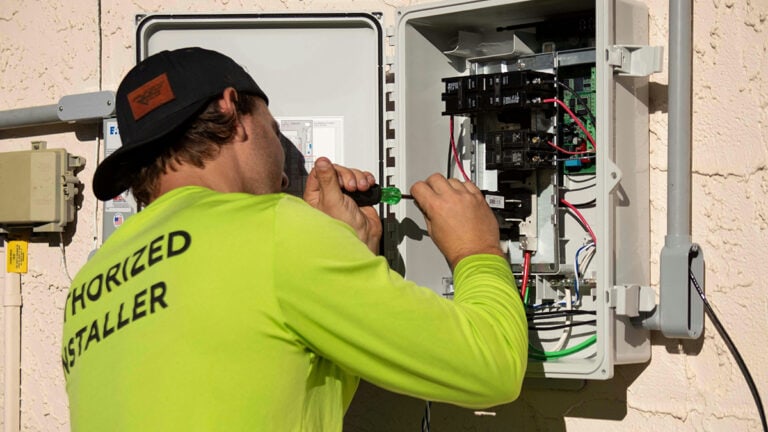
Electrical rough-in coordination represents the most critical technical deliverable. CBC Window Fashions produces detailed Electrical Coordination Documents specifying exactly where power outlets must sit relative to each window, what voltage and amperage those circuits require, whether special runs such as Power over Ethernet are needed for particular architectures, and how conduits should route to avoid interference with other systems. Electricians receive this documentation and execute rough-in accordingly. When installation occurs months later, every location is pre-powered and ready — no surface-mounted raceways, no exposed wiring, no costly wall modifications.
This level of coordination mirrors standard practice for lighting and audiovisual systems but represents a relatively new development for window treatments. Builders who adopt it report materially smoother closings and happier clients.
What This Partnership Delivers for Custom Home Clients
For individuals planning custom builds, the practical implication is straightforward: window treatment decisions belong in early planning conversations alongside electrical layouts, lighting plans, and built-in specifications. Architects, builders, and interior designers who raise this topic during design phases save their clients money, time, and frustration compared to those who defer it until after move-in.

CBC Window Fashions offers consultations at any project stage — including initial planning before construction begins. Preliminary discussions carry no obligation and often reveal opportunities or constraints that become significantly harder to address once walls close. The company serves over forty cities across the Greater Toronto Area and beyond, with showrooms where prospective clients can experience product options firsthand before committing to decisions.
Internal data underscores the value of early engagement. Approximately ninety percent of CBC Window Fashions’ custom home clients now involve the team during design or construction phases rather than post-completion. These clients report smoother installations, better-integrated aesthetics, and fewer unwelcome surprises compared to those who wait.
The manufacturing infrastructure supporting this partnership merits attention. CBC Window Fashions operates a fifteen-thousand-square-foot facility in Markham featuring ultrasonic fabric cutting technology, automated double-sided inspection, vertical and high-temperature pleat-setting equipment, and daily production capacity exceeding one hundred fifty units. This capability means builder projects receive custom-fabricated products matching exact specifications without delays from overseas outsourcing or quality compromises from third-party fabrication.
Installation execution completes the value chain. The company’s installation teams coordinate carefully with builder schedules, arriving after painting and flooring completion but before final move-in. Complex projects involving multiple days of work proceed systematically, with each unit mounted, powered, individually tested, and commissioned according to pre-agreed scenes and control configurations.
Builders who recognize the importance of this integration are delivering homes that feel complete when owners take possession — not homes requiring another round of decisions, expenses, and disruptions after settlement. And homeowners who insist on early window treatment planning enjoy properly integrated, beautifully executed solutions from day one rather than facing deferred complications they could have avoided entirely.
contributed post













You must be logged in to post a comment.