Outdoor living spaces require adaptable designs because weather conditions change frequently. Louvered pergolas address this need by providing adjustable roof control. The systems allow users to control shade and ventilation needs in both residential and commercial spaces.
How Louvered Pergolas Work
The louvered pergola system operates by installing adjustable horizontal slats that serve as roof elements. The slats rotate to control sunlight, airflow, and rain protection. The slats form a complete barrier that prevents water from entering when closed. The slats allow air circulation and natural light to enter when open.
The structure uses aluminum frames with manual or motorized controls. Some models feature built-in drainage systems that channel water away from the covered space.
Climate Control Benefits
Louvered pergolas provide precise control over outdoor conditions. Users can adjust roof angles depending on weather conditions and comfort requirements.
Main climate control functions:
- Adjustable sunlight exposure.
- Natural ventilation control.
- Rain protection when fully closed.
- Temperature reduction in shaded areas.
- Improved outdoor comfort in hot weather.
These features allow continuous use of outdoor spaces across different seasons. Unlike fixed-roof structures, louvered systems adjust to changing weather conditions.
Manual vs Motorized Systems
Louvered pergolas are available in manual and motorized versions. Manual systems use a crank or lever mechanism to adjust the louvers. They are simpler and have lower installation costs.
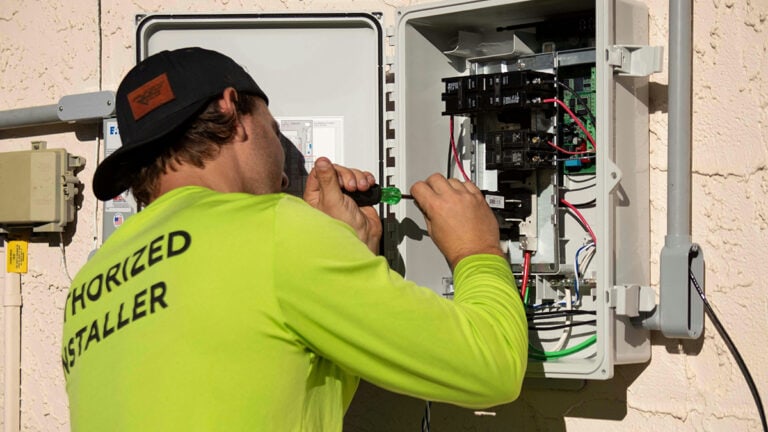
Motorized systems use electric motors, also called actuators, that move the louvers. Users control the system with a remote control or switches mounted on the wall. Some advanced motorized systems have built-in sensors that detect rain, wind, or sunlight. These sensors signal the louvers to adjust automatically in response to weather conditions:
- Manual systems- lower cost, limited convenience.
- Motorized systems – higher cost, automated control.
- Motorized systems – integration with smart home technology.
- Manual systems – fewer mechanical components.
Motorized versions are more common in modern residential and commercial projects due to ease of use.
Design Versatility
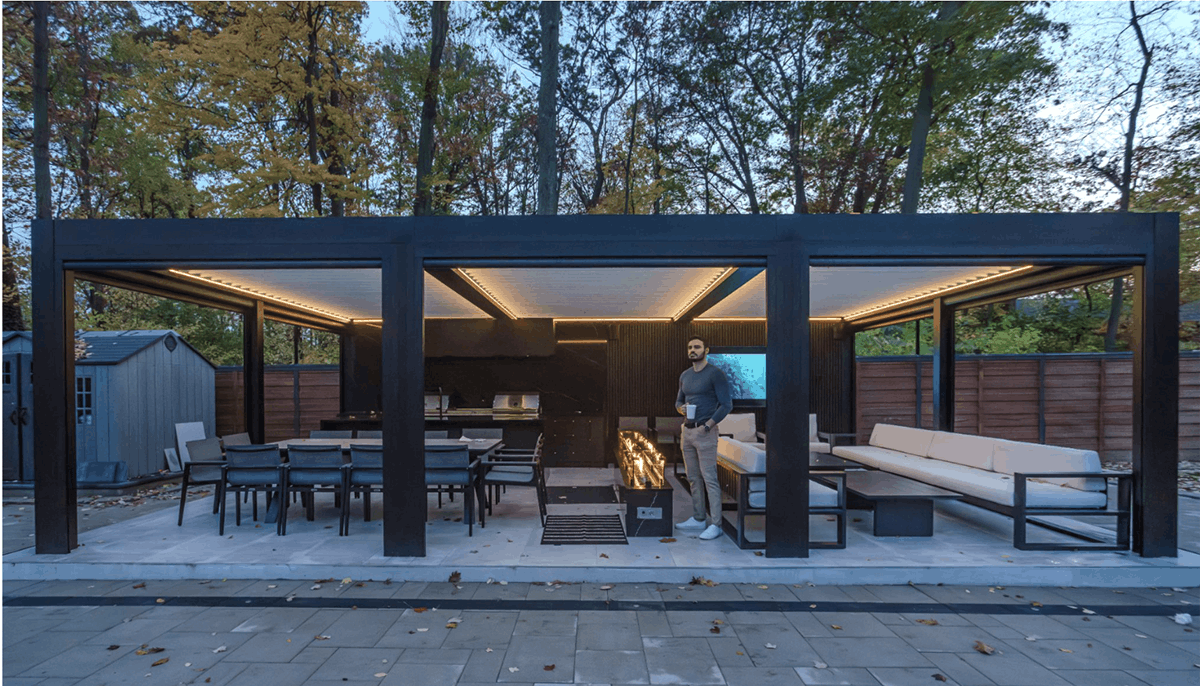
Louvered pergolas are used in a variety of environments. The system operates in residential areas with patios, terraces, pool areas, and outdoor kitchens. Their clean structural lines integrate well with modern architecture.
Restaurants, hotels, cafes, and event spaces use the system for their commercial needs. The system allows operators to adjust roof settings for customer comfort, which they can use in any weather without permanent structural changes.
Aluminum construction supports large spans and modular expansion. The system performs well in both small spaces and extensive areas because of its modular design, which uses louvered pergolas as a base.
Long-Term Value
Louvered pergolas contribute to energy efficiency by reducing direct sunlight exposure on adjacent building surfaces. This can lower cooling requirements during the summer months.
They can increase property value. They improve outdoor usability and boost architectural appeal. Buyers often see functional outdoor spaces as a desirable feature in residential properties.
Maintenance needs are low, especially in aluminum systems. Regular cleaning and basic mechanical inspection are usually enough.
Louvered pergolas provide flexible control over outdoor environments. The system’s adjustable components, weather control, and various integration features make it appropriate for contemporary residential spaces. The system establishes new standards for outdoor comfort through its combination of adaptable elements and strong construction, and practical design features.
submitted post