
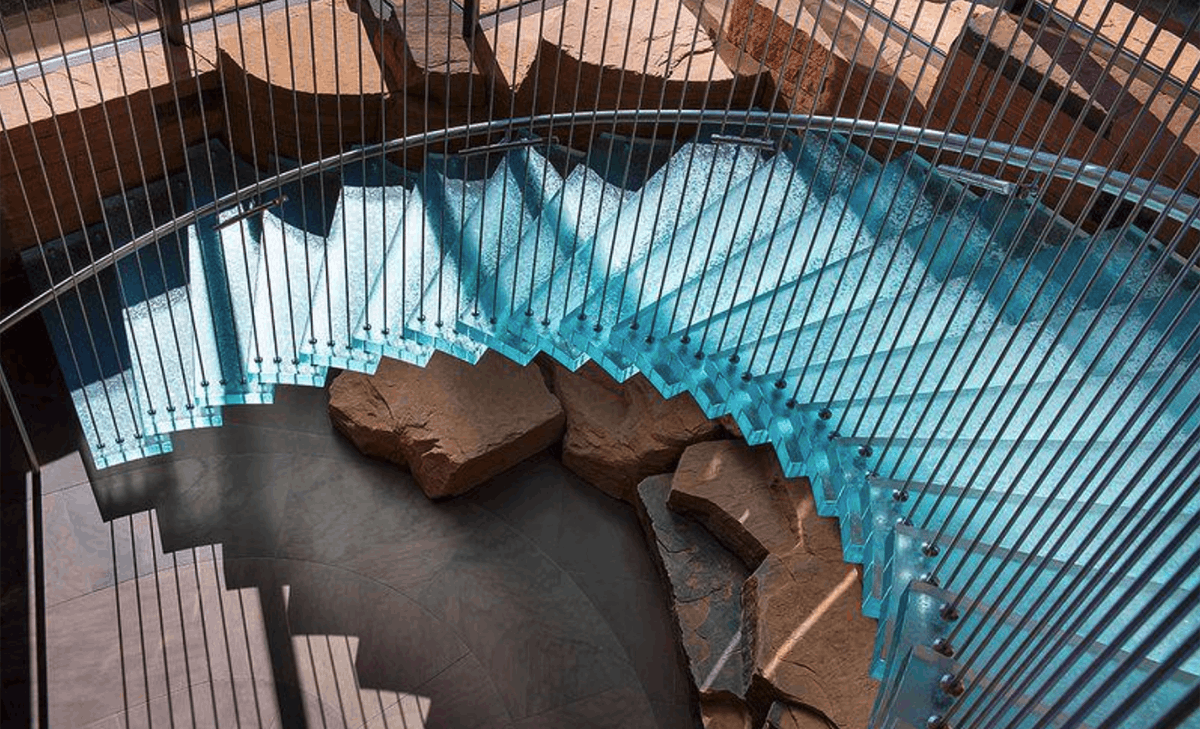
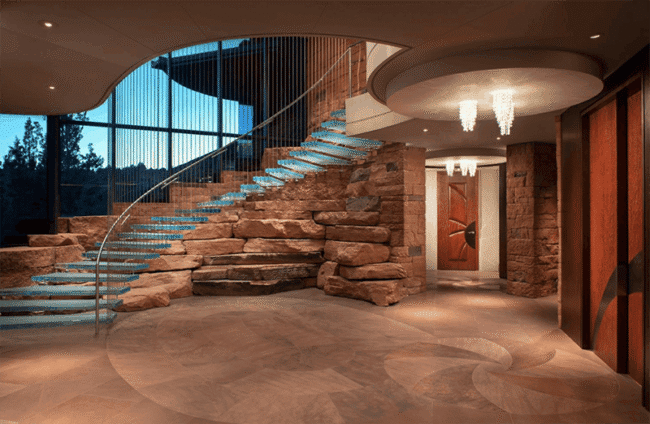
Open any glossy listing for a renovated home in Leslieville or a new build in the Annex and you are likely to spot the same showpiece: a staircase that seems to hang in mid-air, treads floating without visible support. Once reserved for galleries and luxury hotels, the floating staircase has become one of the most requested features in high-end Toronto interiors. According to the Canadian Home Builders’ Association, buyers increasingly value design elements that maximize light and openness, and few features deliver both as dramatically as a staircase you can almost see through.
The trend has been accelerated by a material that designers once used sparingly: structural glass. Thick, fused treads have moved from novelty to centrepiece, and companies producing floating glass staircases now collaborate with architects to engineer steps that carry full residential loads while appearing almost weightless. The effect is part sculpture, part engineering, and entirely suited to the narrow, light-starved floor plans that define so much of Toronto’s housing stock.
Why glass, and why now
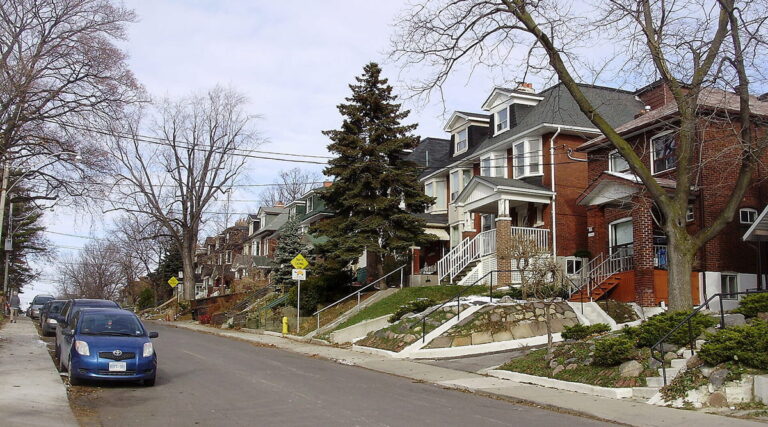
Toronto’s classic semi-detached and row houses share a common problem: they are long and narrow, with daylight reaching only the front and back. A solid staircase in the middle of the home blocks what little light there is. Swap it for glass treads, and the stairwell stops being a wall and becomes a window, letting light spill between floors and making compact spaces feel considerably larger.
There is a practical side too. Modern architectural glass is annealed and fused to thicknesses that resist scratching, staining and warping, and textured surfaces add slip resistance underfoot. Paired with LED lighting fused inside or beneath each step, a staircase doubles as a source of ambient light after dark, a detail that photographs beautifully and reassures anyone navigating the stairs at night.
The design options at a glance
No two floating staircases are quite alike. The look can be tuned from barely-there minimalism to a bold helical statement, and the choices below are where most homeowners start.
| Choice | Options | Best for |
|---|---|---|
| Tread thickness | 1.5 in to 4 in fused glass | Longer spans and cantilevered steps need thicker glass |
| Clarity | Crystal-clear low-iron or frosted | Clear for maximum light; frosted for privacy |
| Lighting | Integrated white or RGB LEDs | Ambiance and nighttime safety |
| Support | Wood or concrete spine, or cantilever | Cantilever for the true floating look |
| Form | Straight, curved, spiral | Spiral suits compact urban footprints |
Statement piece, real-world rules
For all their drama, floating staircases are held to the same safety standards as any other. Treads intended for homes are engineered to exceed residential load and impact requirements, and reputable fabricators test for slip resistance before a single step is installed. In commercial settings such as boutique hotels or retail mezzanines, the bar is higher still, and the glass is specified accordingly. The takeaway for homeowners is simple: this is a custom, engineered product, not an off-the-shelf kit, and the result is only as good as the fabrication behind it.
What it signals to buyers
Real estate agents have noticed that a well-executed glass staircase reads as a marker of quality, the kind of detail that suggests the rest of the home was finished with equal care. In a competitive market, that perception matters. A floating staircase will not single-handedly sell a house, but it sets a tone the moment a buyer walks in, and it makes the listing photos impossible to scroll past.
Frequently asked questions
Are floating glass stairs safe to use every day?
Yes. Treads built for residential use are engineered to exceed standards for load, impact and slip resistance, and textured finishes add grip. Commercial installations are held to even stricter requirements.
Do glass treads make a small Toronto home feel bigger?
They can. Because light passes through the glass, a stairwell that would normally block daylight instead lets it travel between floors, which makes narrow or interior spaces feel more open.
How thick does the glass need to be?
It depends on the span and the design. Most projects use treads between 1.5 and 4 inches thick, with thicker glass reserved for longer or cantilevered steps.
How do you keep glass stairs clean?
The surface is non-porous, so mild soap or standard glass cleaner is enough. The treads resist staining and stay clear with minimal upkeep.
Can a floating staircase be installed in an existing home?
Often, yes, though it is a custom project. A fabricator typically works from the home’s measurements and structure to design treads and supports that fit the existing space.
This article is provided for general information. Any structural or glass installation should be designed and verified by qualified professionals.














You must be logged in to post a comment.