
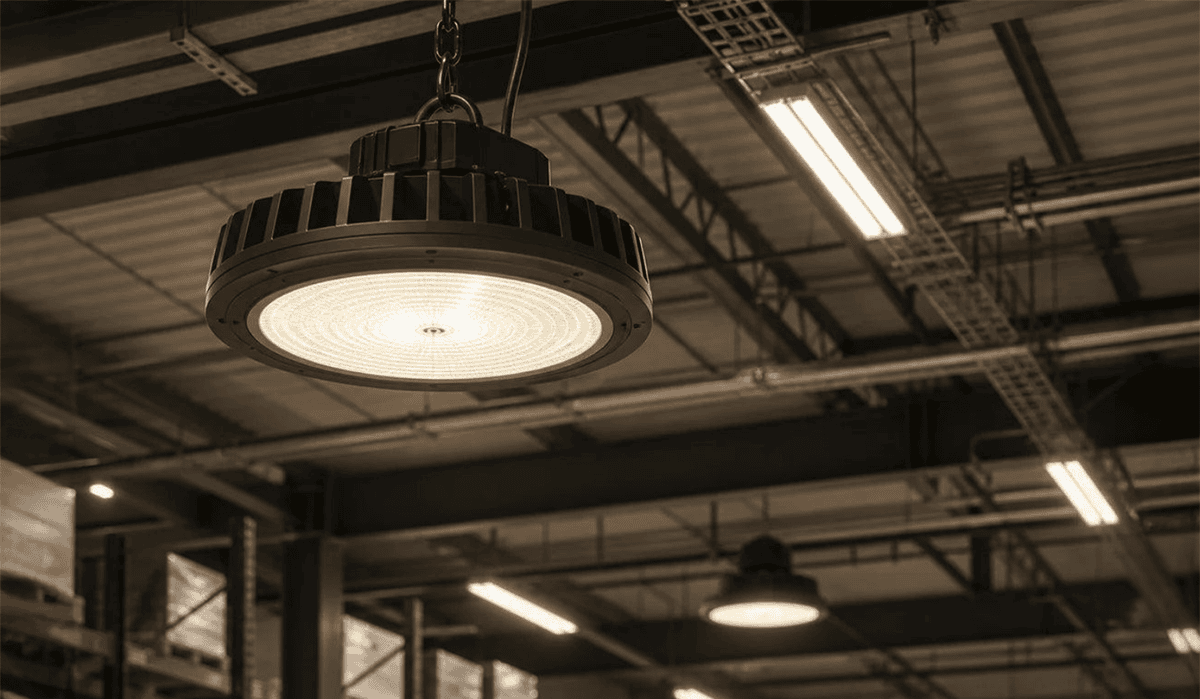
Walk through almost any warehouse, office tower or retail floor in the Greater Toronto Area after dark and you will notice something has changed. The flickering fluorescent tubes that defined commercial spaces for decades are disappearing, replaced by crisp, even light that costs a fraction to run. The shift is being driven less by aesthetics than by arithmetic: with electricity rates climbing and Ontario’s Save on Energy programs putting money back in the pockets of businesses that upgrade, the case for modernizing has rarely been stronger.
For facility managers, the math is straightforward. Lighting can account for a sizeable share of a commercial building’s electricity bill, and older systems waste much of that energy as heat. Today’s commercial lighting runs on LED technology that draws far less power, lasts years longer and needs almost no maintenance. The result is a quieter operating cost line and, for many Toronto operators, a payback period measured in months rather than years.
The numbers behind the switch
The appeal of an LED retrofit comes down to four levers that all move in the owner’s favour at once: lower draw, longer life, reduced maintenance and, in Ontario, available incentives. The table below sketches how a typical legacy fixture compares with a modern LED equivalent in a commercial setting.
| Factor | Legacy fluorescent / HID | Modern LED fixture |
|---|---|---|
| Energy use | High; significant heat loss | Up to 50-70% lower draw |
| Typical lifespan | 10,000-20,000 hours | 50,000+ hours |
| Maintenance | Frequent tube and ballast changes | Minimal; few moving parts |
| Light quality | Flicker, colour drift over time | Stable output, selectable colour temperature |
| Rebate eligibility (ON) | Rarely | Often eligible via Save on Energy / IESO |
Numbers vary by building, run-time and fixture type, but the direction is consistent. A grocery distributor running high-bay fixtures around the clock will see savings stack up faster than a nine-to-five office, yet both come out ahead once the rebate and maintenance savings are counted.
More than a utility bill story
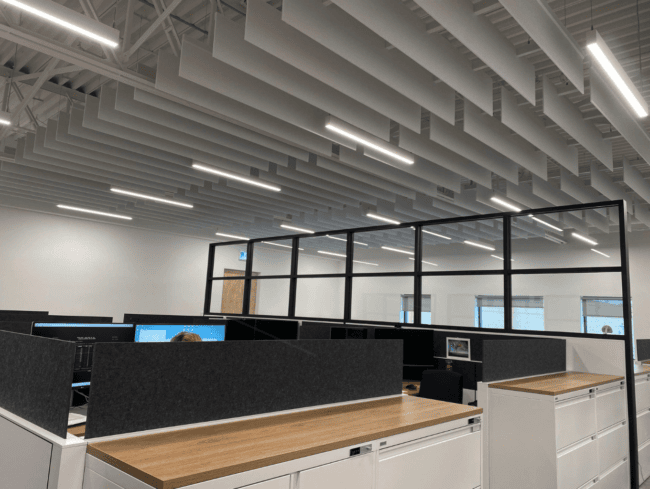
Energy is the headline, but it is not the whole story. Lighting quality has a measurable effect on how people work and shop. Warehouses with bright, uniform illumination report fewer picking errors and safer aisles. Retailers find that the right colour temperature makes products look truer and shelves feel more inviting. Offices that move away from harsh, flickering tubes often hear fewer complaints about eye strain and afternoon fatigue.
Newer fixtures also give operators control they never had before. Selectable colour temperature lets a single product suit a parking lot, a stockroom or a showroom. Built-in sensors dim or switch off lighting in empty zones, and emergency-rated units keep exits visible when the power fails, a requirement that building inspectors across Ontario take seriously.
What to weigh before upgrading
- Run-time: spaces lit around the clock deliver the fastest payback.
- Compliance: confirm fixtures carry the right certifications and meet emergency-lighting rules.
- Rebates: check current Save on Energy and IESO offers before purchasing, as program terms change.
- Colour temperature: match the light to the task, warmer for hospitality, cooler for industrial precision.
- Controls: sensors and dimming add cost up front but compound the savings over time.
A trend with momentum
None of this is unique to Toronto, but the city’s mix of aging commercial stock, high occupancy and supportive provincial programs makes it fertile ground. As lease renewals and renovation cycles come due, lighting is increasingly the first line item owners revisit, because it is one of the few upgrades that pays for itself while making a space measurably better to occupy. For a city that prides itself on getting with the times, swapping out the old tubes is starting to look less like an expense and more like a no-brainer.
Frequently asked questions
How much can a business actually save by switching to LED?
Savings depend on how many hours the lights run and what they replace, but reductions in lighting energy use of roughly half are common, and longer fixture life cuts maintenance costs on top of that. Spaces with long operating hours see the quickest returns.
Are there rebates for commercial lighting upgrades in Ontario?
Yes. The province’s Save on Energy programs, delivered through the IESO, periodically offer incentives for energy-efficient lighting in commercial and industrial buildings. Terms and eligibility change, so it is worth confirming the current offer before buying.
Will new LED fixtures meet building code requirements?
Reputable fixtures carry recognized safety certifications, and emergency-rated models are designed to satisfy exit-lighting rules. Always verify that a given product meets the requirements for your space and occupancy type.
How disruptive is a retrofit?
Most LED replacements are designed to fit existing mounting and wiring, so changeovers are typically quick and can often be scheduled outside business hours to avoid downtime.















You must be logged in to post a comment.