
Are you noticing damp spots, musty odours, or white stains on your basement walls this spring? Here is what Toronto homeowners need to know about seasonal basement moisture – and when to act before small problems become expensive repairs.
Every spring, Toronto homeowners discover the same thing: winter has not been kind to their basement. The city’s clay-heavy soil holds water like a sponge. When it freezes in January, it expands and pushes against foundation walls. When it thaws in April, it contracts – leaving tiny gaps and cracks where groundwater finds its way in. By the time you notice the stain on the wall, the moisture has been seeping through for weeks.
Understanding why this happens is the first step. Knowing when to call a professional is the second. This article covers both – so you can make a clear-headed decision before the damage compounds.
What Makes Toronto Basements Especially Vulnerable
Toronto sits on dense glacial clay – a soil type that swells when wet and shrinks when dry. Unlike sandy or gravelly ground, clay holds water rather than draining it away. In winter, that saturated clay freezes and expands outward, pressing hard against your foundation walls. Come spring, the process reverses.
Over years – sometimes decades – this seasonal movement opens micro-cracks at wall joints and around pipe penetrations. Once a crack forms, water follows the path of least resistance, every single spring. The city’s aging housing stock adds to the problem: a significant share of Toronto homes were built before modern drainage standards were established, when a simple tar coating on the foundation wall was considered adequate.
Five Warning Signs Your Basement Has a Moisture Problem
- Efflorescence – white or grey chalky powder on concrete walls. Water is moving through the masonry and depositing dissolved minerals on the surface as it evaporates.
- Peeling paint or soft drywall – moisture migrating through the wall face, trapped behind finished surfaces.
- Persistent musty or earthy odour – mould is almost certainly growing somewhere behind a wall or under flooring.
- Rust stains near floor drains, at pipe bases, or on the bottom of metal storage shelving.
- Cracks along the base of walls – especially the joint where the wall meets the floor, which is the most common water entry point in Toronto homes.
Even one of these signs is worth investigating. Multiple signs appearing at the same time usually means the moisture source has been active for at least one full seasonal cycle.
The Seasonal Pattern: When Is Risk Highest?
| Season | Moisture Risk | What Drives It |
|---|---|---|
| Winter (frozen ground) | Low | Ground pressure stable; cracks sealed by frost |
| Early spring (thaw) | High | Saturated soil, snow melt, hydrostatic pressure peaks |
| Late spring / summer | Medium | Heavy rain events; dry spells between them |
| Fall | Medium-High | Soil reabsorbs fall rain before freeze; window wells flood |
Spring is the critical window for two reasons: the problem is most visible, and repair costs are lowest before secondary damage like mould or wall displacement sets in. Waiting until summer or fall means dealing with damage that has had months to compound.
Interior vs. Exterior: What Is the Difference?
Interior drainage systems are installed along the perimeter of the basement floor. A channel collects water entering through the wall-floor joint and routes it to a sump pump, which discharges it safely away from the foundation. This approach manages water after it enters rather than stopping it at the source – but it is highly effective, less disruptive, and considerably less expensive than exterior work.
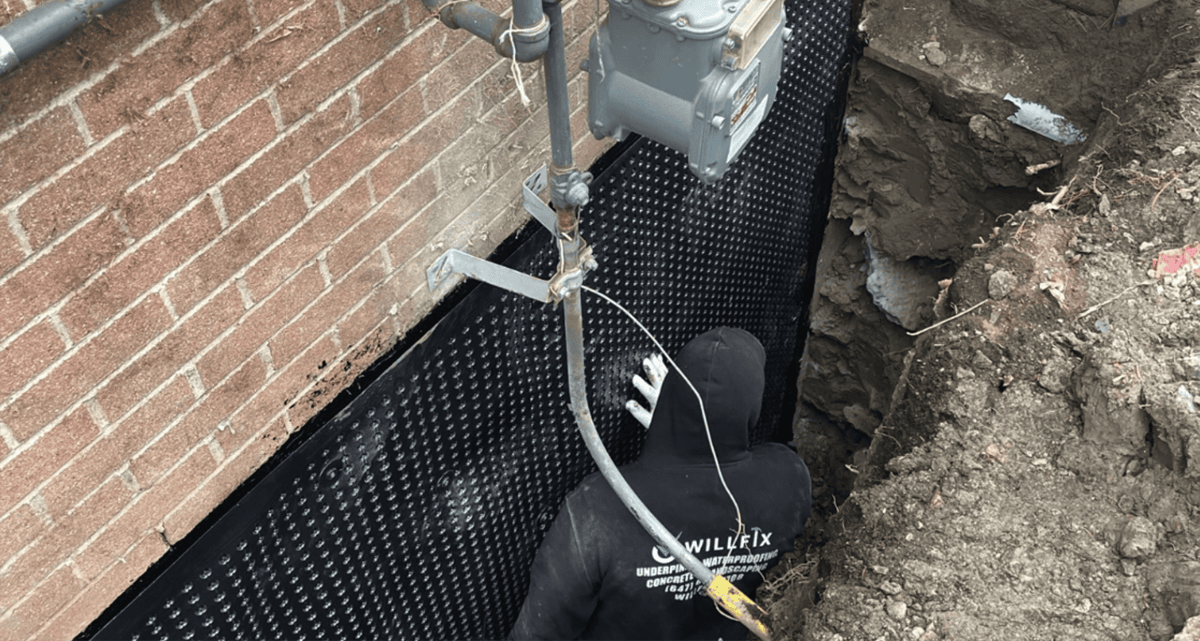
Exterior waterproofing means excavating around the foundation, cleaning the wall surface, applying a waterproof membrane, and installing new drainage tile. It addresses the problem at its source but is a major project that requires permits and significantly more time and cost.
Which solution is right depends on the cause, severity, and age of your home. A thorough inspection – not a visual guess – is what determines whether your exterior membrane has failed or whether interior drainage is the right long-term answer.
What Homeowners Can Do Before Calling Anyone
A surprising number of minor moisture problems have simple, free fixes. Start by checking that the soil and landscaping around your foundation slopes away from the house – at least one inch per foot for the first six feet. Clear your window wells of debris and make sure the drainage gravel beneath them is not compacted or missing. Extend your downspouts at least two metres from the foundation wall before they discharge.
These grading and drainage adjustments fix many cases of minor moisture entry. If your basement dries out after making these changes, the source was surface water, not groundwater pressure – and you have avoided an expensive repair call.
When to Call a Professional
Call a professional when water appears during or immediately after rainfall, when cracks are actively growing or wider than a few millimetres, when there is any horizontal cracking or wall deflection, or when a DIY fix has not held through a second season. These are signs of ongoing structural or drainage issues that surface patches will not resolve.
Homeowners dealing with recurring wet basement issues in Toronto often find that a combination of interior drainage and targeted crack repair is the most cost-effective solution. Qualified contractors offering wet basement solutions Toronto homeowners can rely on will assess whether the issue is hydrostatic pressure, membrane failure, or a structural crack – and recommend the fix that actually addresses the cause.
For more context on how Toronto’s housing stock and seasonal weather patterns affect home maintenance, Toronto Times covers local home and property topics year-round.

Questions to Ask Before You Hire
- What is the root cause – is it hydrostatic pressure, a failed membrane, poor grading, or an active crack?
- Is the recommended fix interior, exterior, or both?
- Does the work come with a written, transferable warranty?
- Will a permit be required, and who pulls it?
- What happens to the warranty if the house is sold?
A contractor who cannot answer these questions clearly is worth looking elsewhere for. Basement moisture repair is a significant investment, and the answers to these questions determine whether you are buying a permanent fix or a temporary patch.
References
- Canada Mortgage and Housing Corporation – Investigating Moisture in Basements
- City of Toronto – Managing Water on Your Property
- Health Canada – Mould in the Home
submitted post
















You must be logged in to post a comment.